
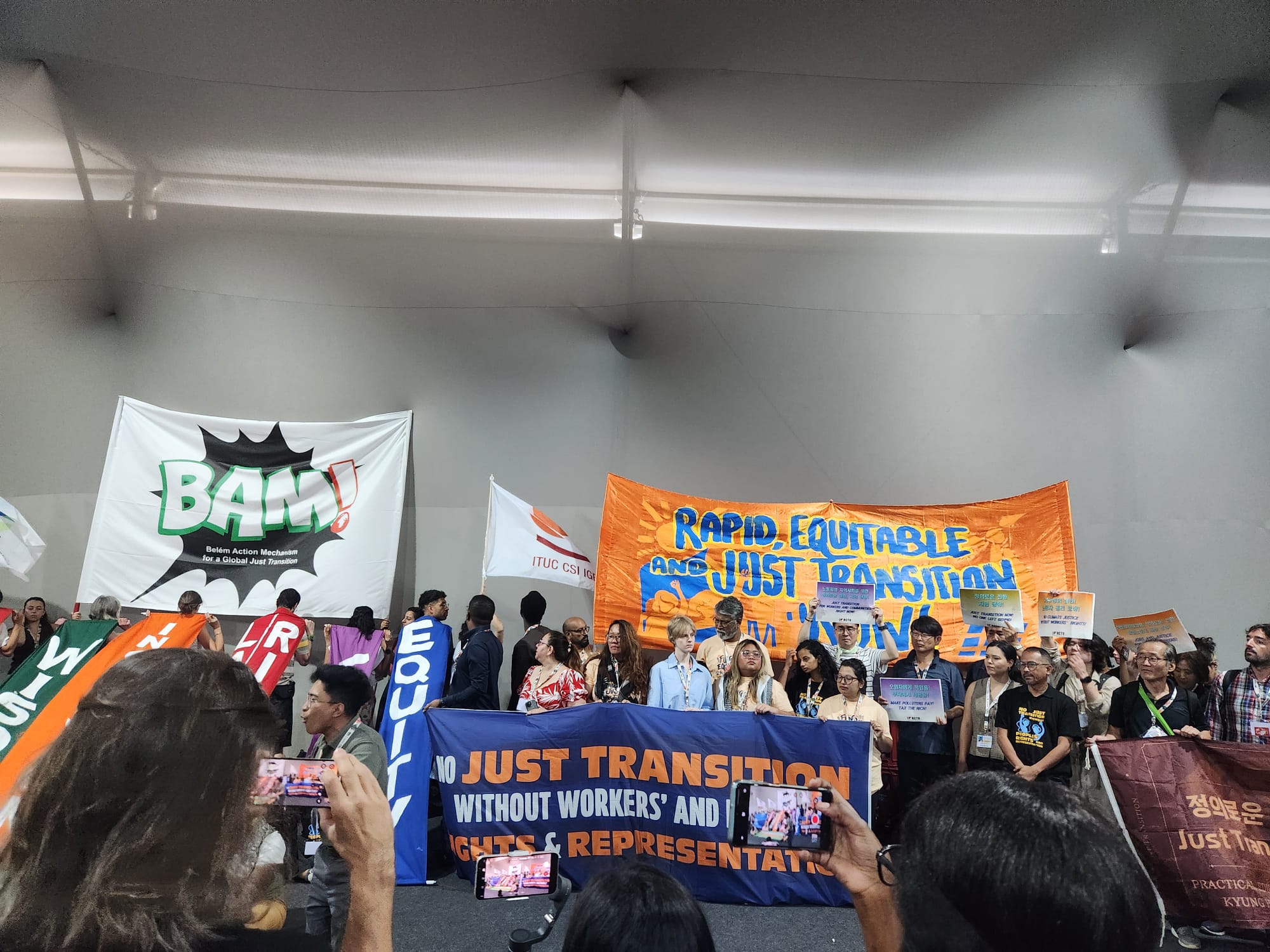
November 17 2025
The climate crisis is deeply intertwined with inequality. Inequality is both a driver of climate change and made worse by its impacts.
A recent Oxfam report found that someone from the richest 0.1% generates more carbon pollution in one day than the poorest 50% of people produce in a whole year.
Super-rich individuals and corporations are not only driving this pollution—they are profiting from it and using their influence to stall climate action. This is clear at the ongoing COP30 climate summit in Belém, Brazil, where analysis from Kick Big Polluters Out shows that 1 in every 25 participants is representing the fossil fuel industry.
The impacts of the climate crisis are uneven, too. Racialized and Indigenous communities in Canada are disproportionately exposed to pollution and contaminants, which contributes to health inequities. People with disabilities are more likely to experience barriers, risks, and even death in the event of extreme weather and disasters. And the climate crisis is deeply gendered, amplifying existing inequalities.
And yet, people from marginalized communities are often underrepresented in decision-making and policy-making spaces. This is on full display at COP30, where local Indigenous peoples have organized demonstrations to demand that their voices be heard and action be taken to ensure respect for their rights and territories.
The inequities of the climate crisis are also clear on a global scale: a small number of wealthy countries are responsible for most of the historical emissions that have caused climate change, while countries across the Global South bear the brunt of the effects.
Canada signals a retreat from climate action
At a time when climate action is needed more urgently than ever, the recent federal budget makes clear that Canada is not meeting the challenge.
Missing from the budget were meaningful investments in climate action to meet Canada’s emissions reduction targets and adapt to climate impacts. In fact, the government is cutting funding to public transit and home energy efficiency. There was no mention of a Just Transition, which is so crucial to ensure workers and communities are supported and at the table in the shift toward a low-carbon economy.
The budget also signaled that the government is walking back from its climate obligations and previously announced measures: it indicated the oil and gas emissions cap could be abandoned and promised to gut anti-greenwashing rules. This suggests the Carney government is bending to pressure from the fossil fuel industry and conservative politicians.
The Carney government also continues to fall short on tax fairness, an essential tool for curbing the inequalities of income and wealth that fuel the climate crisis. The decision to repeal the luxury tax on private jets and yachts as part of the federal budget—in the context of an affordability crisis, strained public services, and a climate crisis fueled by the wealthy—seems to encapsulate the problem.
It is possible to tackle inequality and the climate crisis together. Proposals like a wealth tax and excess profits tax have garnered increasing popular support.
Global climate justice needed
As the COP30 climate summit takes place this month, countries must come ready to take meaningful action on the climate crisis. This includes the duty of wealthy countries like Canada to contribute their fair share to climate finance to support those on the front lines. They also need to deliver on key commitments like Just Transition, adaptation, and adopting a Gender Action Plan.
NUPGE will be participating in COP30 as part of the Canadian Labour Congress and Climate Action Network Canada delegations. It’s important for unions to be at the COP to ensure that workers’ perspectives and demands are part of the discussion. It is also a critical time for coordination and solidarity to advance shared priorities and the demands of those on the front lines of the climate crisis. During the COP and outside of it, civil society plays a vital role in holding governments to account.