
October 1 2025
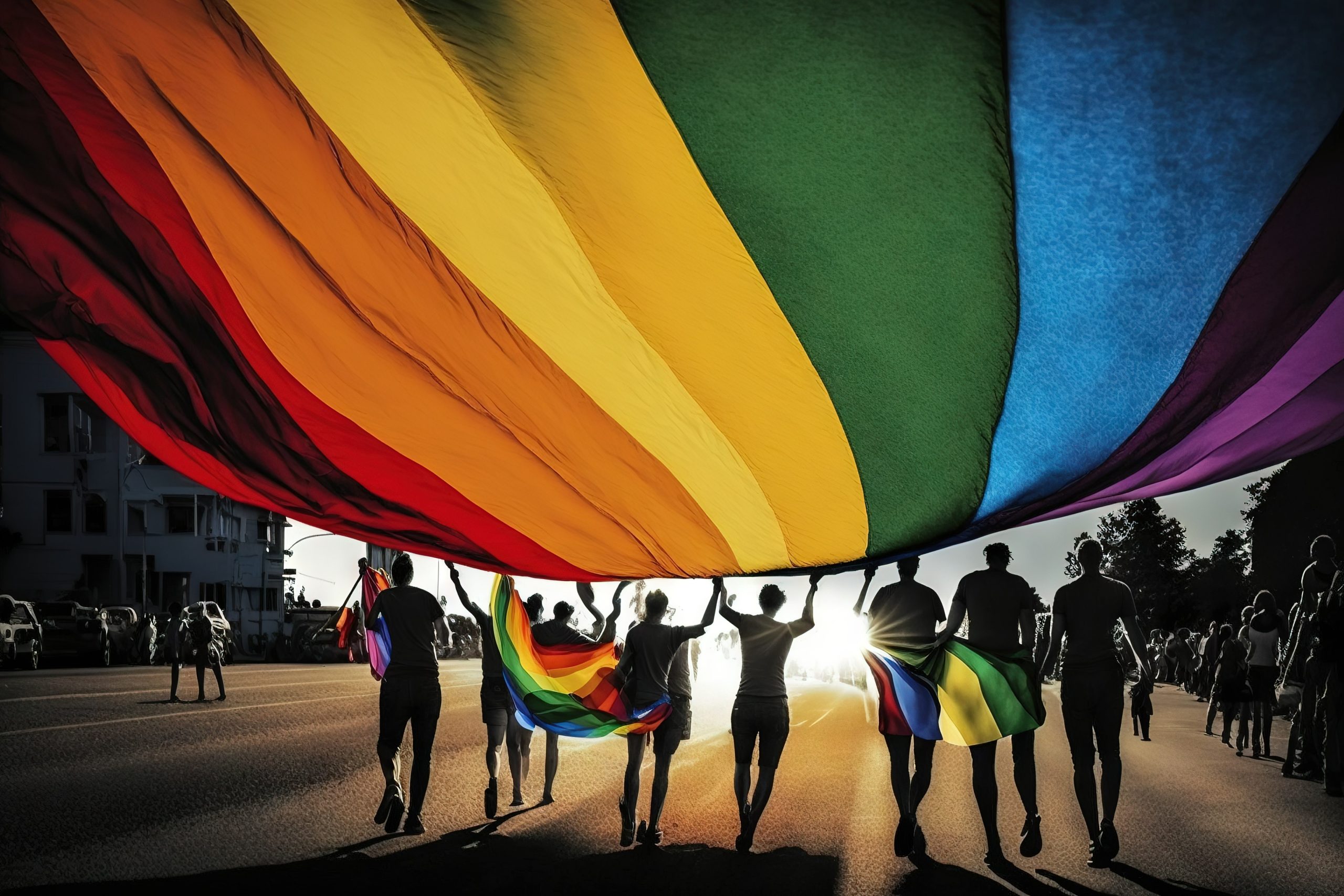
In October 1994, Rodney Wilson, a gay man and Missouri high school teacher created the inaugural LGBT History Month. October was chosen due to schools being in session and it being the month when Coming Out Day is celebrated. In more recent years, several other 2SLGBTQIA+ commemorative days are now also celebrated in October.
NUPGE is proud to celebrate 2SLGBTQIA+ history and pledges its continued support for 2SLGBTQIA+ rights. The following are excerpts from Resistances, Movements, and Histories of 2SLGBTQIA+ Communities, a policy paper that was produced for NUPGE’s 2025 Triennial Convention. Though far from a complete history, it draws connections between 2SLGBTQIA+ struggles, past and present, and examines how social determinants of health, bigotry, policy, discrimination, and social categories impact on 2SLGBTQIA+ people.
Canada has a rich 2SLGBTQIA+ history. Many Indigenous cultures recognize genders and sexualities beyond western classifications. Approximately two-thirds of the 200 Indigenous languages spoken in North America contain terms to describe people who were neither men or women. In spite of colonization efforts to assimilate and eradicate the diversity of Indigenous Peoples and their cultures, many of these diverse identities still exist today.
From the 1950s to the 1990s, 2SLGBTQIA+ people were systemically harassed, abused, investigated, and fired from the Canadian Armed Forces (CAF), the Royal Canadian Mounted Police (RCMP), and the federal public service as part of the “LGBT Purge.” During the cold war, the federal government incorrectly believed that having LGBT individuals in the CAF, the RCMP, and the public service opened them to blackmail by the Soviet government, thereby necessitating that those individuals be purged from the public service to safeguard national security.
In 2016, survivors of the LGBT Purge, led by Todd Ross, Martine Roy, and Alida Satalic, launched a nation-wide class action lawsuit against the Canadian government. In 2017, Prime Minister Justin Trudeau issued an apology to the victims and survivors of the LGBT Purge. And, in June 2018, the Final Settlement Agreement was approved totaling up to $145 million dollars.
Of course, the federal government was not the only oppressive force against 2SLGBTQIA+ people. Other legal, economic and social strategies defined 2SLGBTQIA+ resistance for decades. Police raids on gay bars, lesbian spaces, and other establishments were common. The most famous raid, “Operation Soap” was carried out in February 1981. 200 Toronto police officers carried out a series of raids of four gay bathhouses in Toronto, charging 306 men for their alleged connection to a bawdy house (a brothel) in what was, at the time, the largest arrest in Toronto history. Despite almost all charges being dropped, the names of the men charged were published in the media, leading to devastating stigma and homophobic discrimination from their communities, including at work, among friends, and among family. This sparked a wave of activism in the gay community.
It should be noted that Operation Soap was not the end of police raids of 2SLGBTQIA+ bars and bathhouses. In September 2000, a Toronto Women’s Bathhouse Committee event with 350 participants was raided by Toronto police under the guise of checking for liquor license violations, though it was suspected that the police were trying to find violations of anti-prostitution laws (of which there were none).
In 2016, Toronto police Chief Mark Saunders said the force regrets the raids carried out against 2SLGBTQIA+ establishments, though many do not view this as a satisfactory apology. Just months after Saunders’ statement, Toronto police carried out “Project Marie” where they used undercover police officers to entrap gay, bisexual, men who have sex with men, and transgender people and crack down on alleged sexual activity in Marie Curtis Park. 89 charges were laid against 72 people.
Read more: Resistances, Movements, and Histories of 2SLGBTQIA+ Communities